The phrase "slipped disc" gets used loosely. Someone lifts a cooler wrong, feels a bolt of pain run down one leg, and by dinner the family is saying a disc slipped out of place. That is not quite what happens, but the pain is real, and disc trouble is one of the most common reasons people in Hastings and the surrounding Tri-City area start looking for help. At Murray Natural Integrated Health, we treat disc-related pain without medication and without surgery, using chiropractic care, advanced therapies, and a functional medicine approach that asks why the disc became a problem in the first place.
A spinal disc is a cushion that sits between two vertebrae. It has a tough outer ring and a soft, gel-like center. A herniated disc, which people also call a slipped or ruptured disc, happens when that gel-like center pushes through the tougher outer layer. The disc has not slid sideways out of the spine and it is not sitting crooked. The inner material has moved into a position where it can press on or irritate a nearby nerve.
That nerve irritation is why a disc problem in the lower back so often shows up as leg pain rather than back pain alone. The same process in the neck can send symptoms into a shoulder or arm.
Here is the part that surprises most people. A lumbar herniated disc is one of the most common causes of lower back pain and leg pain, and most people improve with non-surgical care. A disc problem is not automatically a surgical problem, and it is not automatically a medication problem either.
Disc pain does not look the same in every person, but a few patterns come up often:
A thorough exam matters because several other problems can produce similar symptoms. Muscle strain, joint irritation, and hip or pelvic issues can all masquerade as disc pain, and treating the wrong structure wastes time. That is why the first visit at our Hastings clinic is about finding the actual source rather than guessing at it.
Chiropractors do not pop a disc back into place using force, and a few quick treatments will not fix a herniated disc. That is worth saying plainly, because the word "slipped" sets up a picture of a part that needs to be shoved back where it belongs. Adjustments are gentle and usually painless. They work on the joint restrictions and muscle guarding around the injured segment, which is what gives the disc itself a chance to settle and heal on its own schedule.
Anyone who promises a one-visit correction for a herniated disc is overselling. Real disc recovery is measured in weeks, not minutes, and the plan should be built around that reality.
Most clinics offer one tool. We keep several under one roof in Hastings, which means the plan can be matched to your exam findings instead of forcing your case into a single method.
Gentle spinal adjustments restore motion to segments that have locked up, reduce the reflex muscle spasm that accompanies a disc flare, and take abnormal load off the injured area. The goal is not force. It is creating enough movement and alignment in the surrounding structures that the disc stops being the pinch point. For many patients this is the first thing that lets them sit, stand, or sleep without bracing.
A sore disc rarely travels alone. The muscles, tendons, and fascia around it tighten up and become inflamed from weeks of guarding and altered posture. Shockwave therapy targets that surrounding soft tissue to calm inflammation and help tight, painful tissue let go. When the tissue around the spine relaxes, the spine itself moves better, and that supports the adjustment work rather than competing with it.
PEMF and physical therapy modalities are recovery tools. They support circulation, tissue healing, and comfort while you rebuild strength and tolerance for normal activity. This is the stage many people skip, then wonder why the pain returns. A disc that has calmed down still needs the muscles around it to be strong enough to protect it, and modalities plus guided rehabilitation are how we get there.
Why did this disc give out now? Sometimes the answer is a lift that went wrong. Often it is something broader: chronic inflammation, nutritional gaps that slow tissue repair, hormonal shifts, blood sugar problems, or a body that has been under sustained stress. Functional medicine evaluation with lab-based reporting lets us look at those factors instead of treating the disc as an isolated mechanical event. When the underlying drivers improve, patients tend to hold their results longer and need fewer visits over time.
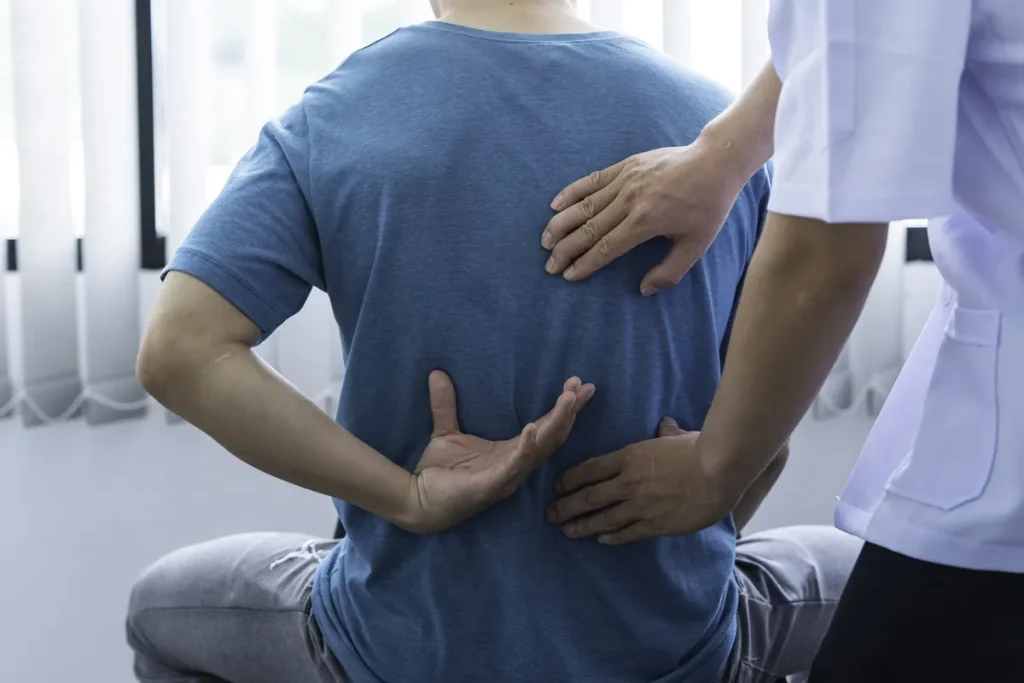
Two conservative basics help most people while they wait for care. The first is rest and activity modification: short periods of relative rest and avoiding the specific movements that make symptoms worse. The second is staying honest about what provokes the pain. If bending forward sends a jolt down your leg, stop testing it ten times a day to see whether it still hurts.
Symptoms that are getting worse rather than better deserve attention rather than patience. If pain is spreading, if strength is dropping, or if sensation is changing, call the clinic and let us know so your plan can be adjusted quickly.
Murray Natural Integrated Health is a Hastings clinic, and most of the people we see are neighbors. Farmers, teachers, nurses, warehouse crews, parents lifting kids all day, and retirees who want to keep gardening all show up with the same basic question: can this be handled without pills or an operating room? Often the answer is yes, and when it is not, you deserve to hear that clearly and get pointed toward the right care.
Our approach is drug-free and root-cause focused. That means we are not interested in masking a disc symptom for a few weeks. We are interested in getting the mechanics right, calming the tissue that has been angry for months, rebuilding capacity, and addressing whatever in your body or daily routine keeps sending you back to the same injury.
If back pain or leg pain has been running your schedule, stop guessing about what is causing it. Call Murray Natural Integrated Health to schedule an evaluation for your disc-related pain. We will review your history, examine the spine, explain what we find in plain language, and lay out a natural plan that fits your situation. If you have been told surgery is your only option, a second look is reasonable before you decide. Reach out today and let us start with the root cause instead of the symptom.
They describe the same condition. A herniated disc occurs when the soft, gel-like center of a spinal disc pushes through the tougher outer layer. People also call it a slipped disc or a ruptured disc. The disc has not actually slid out of position. The inner material has moved where it can irritate a nearby nerve.
In many cases, yes. A lumbar herniated disc is one of the most common causes of lower back and leg pain, and most people improve with non-surgical care. That care can include chiropractic adjustments, physical therapy, activity modification, and other conservative therapies. A careful exam helps determine whether your situation fits that picture.
No. Chiropractors do not pop a disc back in place using force, and a few quick treatments will not fix a herniated disc. Adjustments are gentle and usually painless. They address joint restrictions and muscle guarding around the injured segment, which supports the disc's own healing process rather than forcing it.
Recovery timelines vary widely depending on the disc, the nerve involvement, and how long the problem has been building. What matters is that progress is tracked. At reassessment points we compare your symptoms and function against where you started, and if the plan is not working, we change it or refer you for further evaluation.
Because tissue repair and inflammation are influenced by factors beyond mechanics. Nutritional gaps, chronic inflammation, blood sugar issues, and hormonal shifts can slow healing and make a disc more likely to flare again. Functional medicine testing helps identify those drivers so the plan addresses the reason the injury keeps recurring.
Bring in your blood test results for a wellness evaluation and 2nd opinion! Get to the causes of your conditions.
Call 402-463-4257 or send us a message and we will get you scheduled.
1934 West 2nd Street, Hastings, NE 68901